
Why Grizzly's Math Matters for Bankroll Control
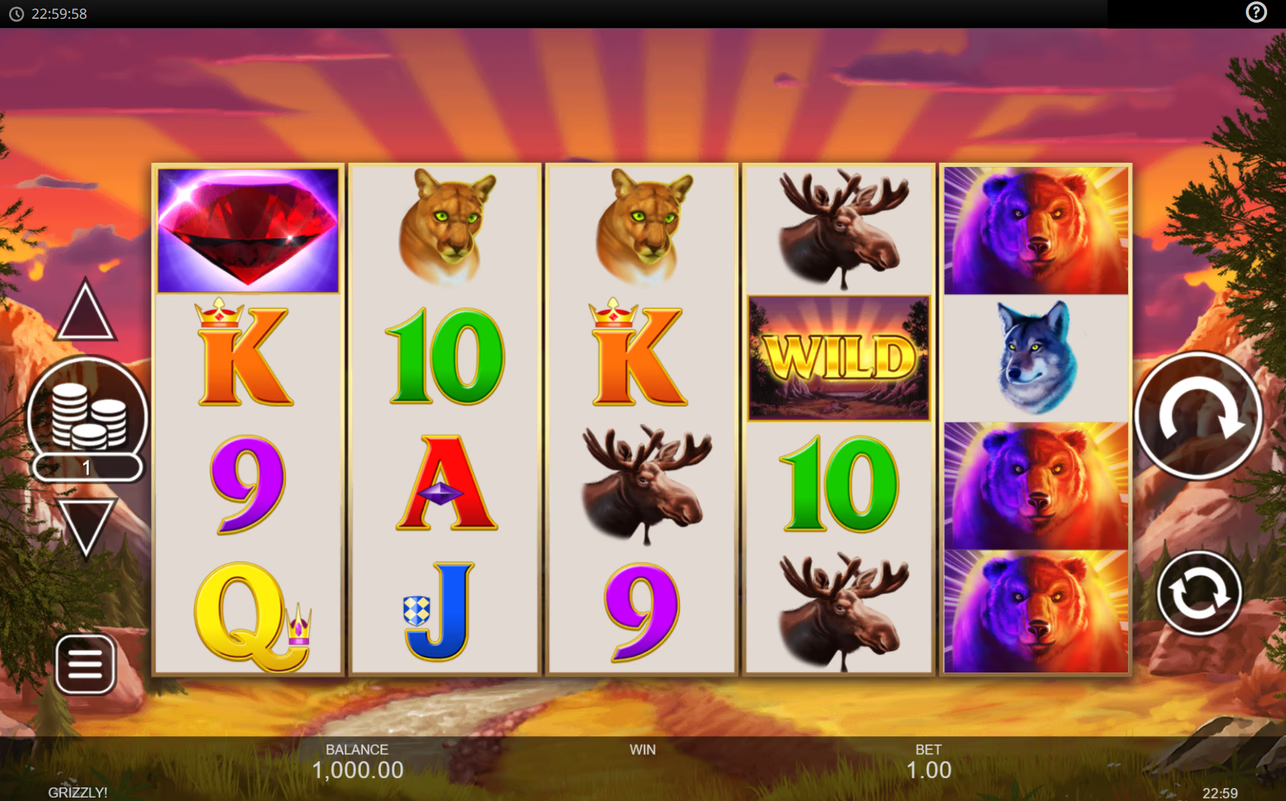
Grizzly runs on a 5x4 grid with a 1024-ways engine, a layout that produces frequent small hits but relies on the free-spins round for its larger payouts. The game's own specification sheet lists an RTP of 94.97% and medium volatility, figures that sit below many comparable 2022-era slots. A lower RTP means the game returns less to players over the long run relative to titles running closer to 96-97%, which is worth knowing before setting a session budget.
The advertised ceiling of 50,000x stake looks dramatic on paper, but medium volatility titles rarely deliver such outcomes on a normal session. Players who chase the headline multiplier on a fixed bankroll risk mistaking a rare mathematical ceiling for a realistic outcome. Treating the max win as a marketing figure rather than an expectation is a basic but often skipped step in responsible play.
There is no bonus-buy option on Grizzly, which removes one common route to rapid, large-stake losses seen on other Inspired Gaming and rival titles. The free-spins round is triggered organically through scatter symbols, and the player is offered a choice between several spin-count and multiplier combinations. That choice point is a good moment to pause and confirm the wager still matches the session's original budget rather than being adjusted upward in pursuit of a bigger multiplier tier.
Because hit frequency is not published by the provider, players cannot rely on a stated number to judge how often the base game will return value. In practice this means budgeting by time and total stake rather than by an expected pattern of wins, which is the more reliable approach on any unrated-frequency slot.
Minimum Age and Provincial Rules
The legal minimum age to gamble in Canada is 19, except in Alberta, Manitoba, and Quebec, where the threshold is 18. Age verification is enforced by the licensed operator hosting Grizzly, not by Inspired Gaming directly, and no operator should permit account creation or play below the applicable provincial minimum. Canadian regulators — including AGCO in Ontario, GPEB in British Columbia, and Loto-Québec in Quebec — set the licensing and player-protection standards that operators offering Grizzly are expected to meet, even though no provincial technical certification listing for this specific title was located during research. Confirming that an operator holds a valid provincial or Ontario iGaming licence is a more reliable check than assuming a game's presence on a site implies regulatory approval.
Practical Tools Before You Load the Reels
Most licensed Canadian-facing operators provide deposit limits, loss limits, and session time reminders directly in the account settings, and these apply regardless of which slot is being played. On a medium-volatility, sub-95% RTP title like Grizzly, setting a deposit limit before starting a session is a more effective safeguard than trying to stop at a mental target once the free-spins choice screen or a losing streak has already created momentum to continue.
Self-exclusion programs run at the provincial level rather than through the game or studio. Ontario players can register through AGCO-regulated operator tools or PlaySmart, British Columbia players through GameSense and GPEB-linked resources, and Quebec players through Loto-Québec's own self-exclusion service. These programs exclude a player from all participating operators in that province, not just from a single site or slot.
Demo play is widely available for Grizzly across third-party casino portals and lets a player see how the 1024-ways base game and the four free-spins configurations behave without staking real money. Using the demo to understand pacing and the free-spins choice mechanic before committing a deposit is a reasonable way to separate curiosity about the game from a funded session.
If gambling on Grizzly or any other slot stops feeling like discretionary entertainment — for example, chasing losses, exceeding a set budget repeatedly, or feeling unable to stop during the free-spins selection screen — contacting a provincial support line or a national service such as the Canadian Centre on Substance Use and Addiction's problem gambling resources is a more useful next step than adjusting the stake size.